Health and Safety Policy — Commercial Waste Stoke Newington
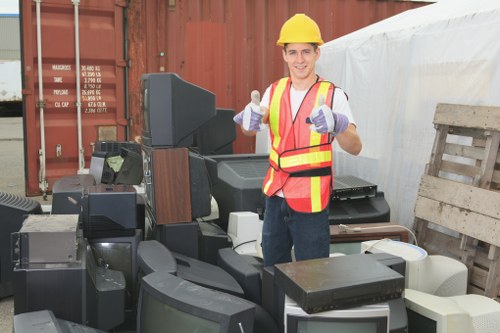 This Health and Safety Policy outlines the commitment of our commercial waste operations to protect employees, contractors, clients and the public. It sets clear duties, controls and procedures specific to a rubbish company service area while maintaining compliance with applicable regulations and industry best practice. The policy applies across all commercial waste collection, transfer and recycling activities undertaken in the service region.
Our primary objective is to reduce risk, prevent injury and avoid environmental harm through robust operational controls, training and supervision. The responsibilities described here are mandatory for all staff and sub-contractors engaged in commercial waste collection, waste transfer handling and disposal activities.
 This document is intended to be a living policy: it will be reviewed and, where necessary, revised at regular intervals or following incidents, changes in legislation or operational changes. It complements other management systems and should be read alongside site-specific risk assessments and method statements prepared for individual contracts or waste streams.
Policy leadership is provided by senior management who will ensure adequate resources are available to implement health and safety measures. Line managers and supervisors are responsible for day-to-day enforcement. Employees are expected to follow safe systems of work and report hazards. Everyone has a duty to prevent harm and to cooperate with audits and training.
The key principles of our commercial waste health and safety approach include: risk elimination where possible, risk reduction through control measures, safe operation by trained personnel and continuous improvement. Controls are prioritized by the hierarchy of risk: elimination, substitution, engineering controls, administrative controls and personal protective equipment (PPE).
 Specific operational measures for rubbish company activities include routine vehicle checks, secure loading and segregation of waste, safe manual handling techniques, and maintenance of containment and spill response equipment. We maintain vehicle and plant inspection schedules and ensure competent operators carry out pre-use checks.
Risk assessment is central to our system. Formal assessments will be completed for collections, uplift points, waste types (including mixed commercial waste, bulky items, and limited hazardous fractions) and any non-routine tasks. Assessments are documented, communicated and retained for review. Control measures are clearly identified and monitored for effectiveness.
Training and competence are mandatory. All personnel receive induction training covering company policy, manual handling, PPE use, spill management, and emergency procedures. Refresher training and specific licences (e.g., vehicle operator qualifications) are provided where required. Strong supervision ensures that competence is applied consistently in the field.
We maintain a clear reporting and investigation process for incidents, near-misses and unsafe conditions. Investigations aim to identify root causes and implement corrective actions. Records of incidents, risk assessments and audits are retained in accordance with retention policies and are used to inform continuous improvement.
Contractor management is a crucial part of delivering safe commercial waste services in the area. Pre-qualification, induction, and ongoing monitoring of subcontractors are mandatory. Contractors must demonstrate the same health and safety standards and cooperate with site rules and permit systems when operating on customer premises or communal sites.
Operational controls include a focus on specific hazards associated with waste collection: sharps and contaminated items, manual handling of heavy or awkward loads, working adjacent to traffic and loading operations near pedestrian areas. Tactical measures include segregated loading zones, use of mechanical aids, and high-visibility garments to reduce risk.
 Emergency preparedness covers spill response, fire response and medical emergencies. Personnel are trained in basic emergency response actions and incident escalation procedures. Emergency equipment is provided and periodically inspected to ensure readiness.
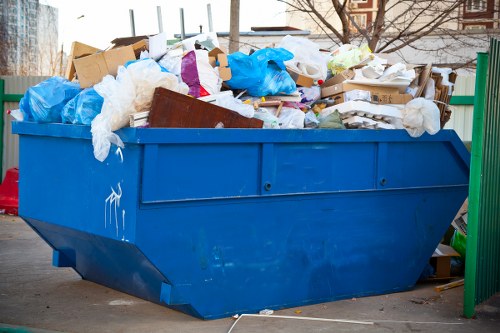 Monitoring and audit processes are in place to verify compliance. Regular inspections, internal audits and management reviews ensure standards are met and performance is measured. Where non-conformances are identified, action plans with clear responsibilities and timescales are implemented.
Health Surveillance and Welfare
We provide access to welfare facilities and where occupational exposures warrant it, health surveillance is arranged in accordance with relevant guidance. Health and wellbeing measures, including vaccination where appropriate for waste handlers, are promoted to support a healthy workforce.Responsibilities and Review
Senior management holds ultimate responsibility for this policy and will review it annually or following significant operational change. Managers, supervisors and employees share responsibility for its implementation. Commitment to continuous improvement is central to maintaining safe, lawful and effective commercial waste services across the service area.Key operational controls summarized:
- Formal risk assessments for tasks and waste streams
- Competence, training and supervision for all staff and contractors
- Maintenance and safe operation of vehicles and handling equipment
- Emergency planning and spill/fire response
- Audit, monitoring and incident investigation to drive improvement
By following this Health and Safety Policy we aim to deliver reliable, compliant and safe commercial waste management services within the rubbish company service area. The policy ensures risks are controlled, workers are protected and environmental impacts are minimised, supporting sustainable operations and public safety.
